


5 payroll red flags to look out for in 2026
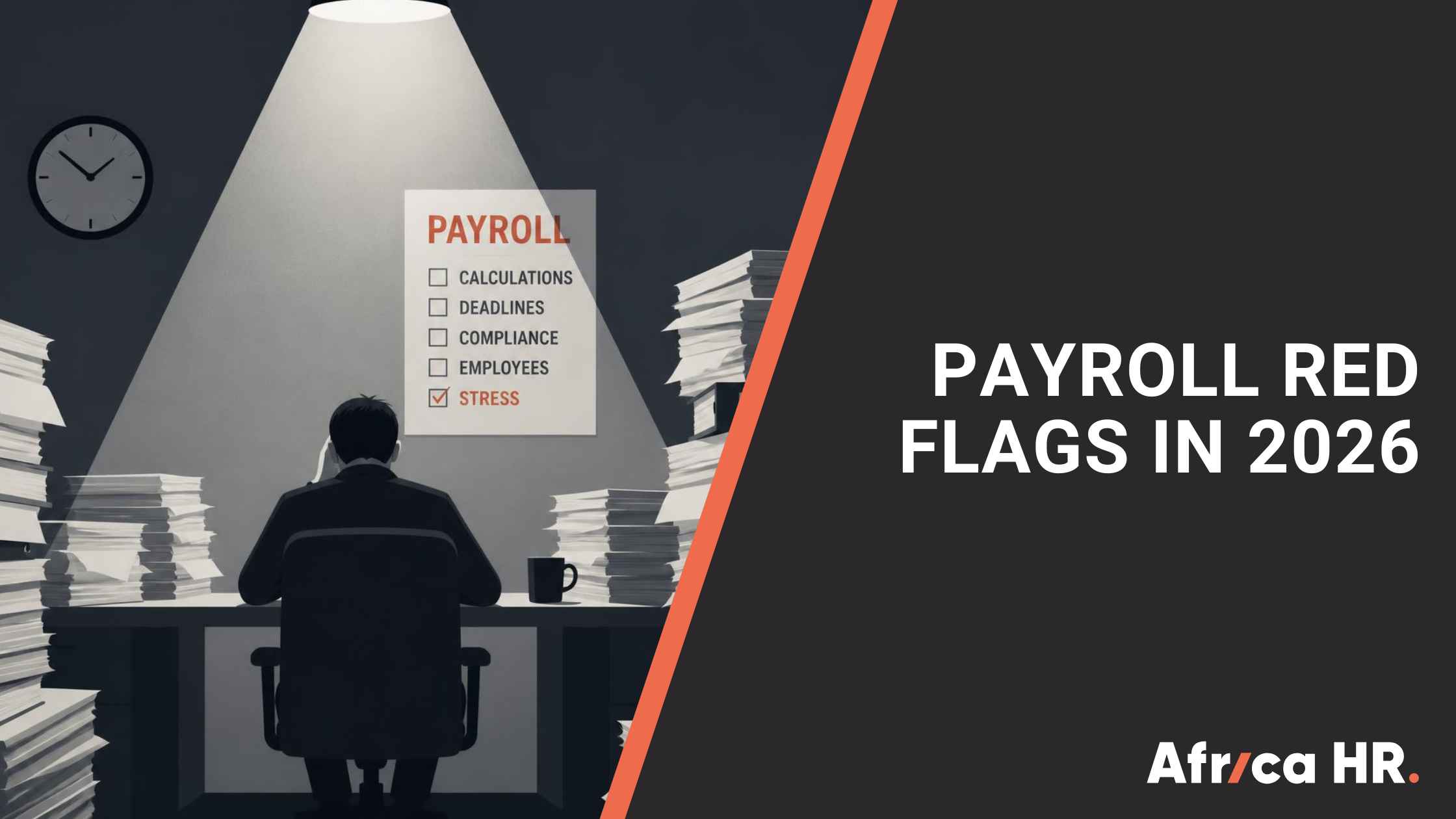
Red flags, costly partnerships, and unmet promises are phrases that apply just as much to payroll arrangements, especially where businesses have not put a rigorous payroll partner selection process in place.
In this article, our payroll experts outline the warning signs worth watching for when working with an African payroll partner in 2026, ranging from minor issues that call for closer attention to more serious ones that should prompt a rethink of the partnership.
1. Frequent retroactive adjustments, bonuses & off-cycle corrections
Adjustments and reconciliations are commonplace when running payroll, but when simple errors consistently show up in your payroll, this is a sign to talk to your payroll provider about why these late adjustments are happening. Because they are neither benign or without consequence. Frequent retroactive adjustments, bonuses, and off-cycle corrections drain company time, cause calculation mistakes, and upset employees.
Why they cause problems
More work
Fixing past pay errors takes extra time for human resources and finance/payroll staff who need to, essentially, process the same payroll run twice to correct it.
Cost issues
Extra manual checks cost more money to process outside the normal schedule. Naturally, more time and more work spent on payroll mean higher payroll costs.
Trust loss
Workers get confused and worried when their pay changes after the fact. Over time, this erodes trust, causes workers to feel not valued, which can have a snowball effect on employee experience and turnover.
Tax & law risks
Changing past pay can lead to reporting errors with local tax offices, draining more time as payroll teams liaise with the authorities to reconcile the numbers.
How to fix the issue
Set clear rules
Create dates for when bonus and overtime numbers must be turned in. Keep track of exceptions (since they do exist and can happen even in the smoothest-running payroll systems) to ensure that retroactive adjustments aren’t the norm.
Fix the root cause
Find out why numbers arrive late (sometimes, there may be structural issues causing this) and train teams to send them on time.
2. Disconnected systems
Disconnected systems are detrimental to your payroll because they:
Create data silos
These are isolated collections of data that are controlled by a single department or system, making it difficultly shareable with other groups).
Force manual work
When data isn’t shared between systems (payroll and accounting systems for example), the data must often be manually input into the other system, draining time and opening the door for manual errors.
Cause bad decisions
When data isn’t shared, businesses are deprived of an accurate overview of how their internal operations work, leading to business decisions which aren’t fully informed, and therefore not fully optimised.
When software tools do not share live data automatically, companies face hidden costs, frustrated workers, and poor service.
Why they cause problems
Manual data entry
Staff must type the same details into multiple separate tools, which wastes time and leads to human mistakes.
No single truth
Different departments see different numbers, making accurate reports and quick choices nearly impossible.
Slow growth
Fixing gaps with manual workarounds prevents a company from scaling smoothly as volume increases
Choose an ISO-certified payroll partner in Africa
Africa HR Solutions is the largest ISO-certified African payroll provider, covering 46+ African countries and supporting over 400 businesses. Our teams, systems, and processes are ISO 27001 certified, ensuring global data security standards wherever you are across Africa.
To find out how we can best help you, get in touch with one of our payroll consultants today.
3. Excessive user access
Excessive user access in payroll is poor practice for a number of reasons. It heightens payroll security risks, specifically increasing internal payroll controls failures, enabling payroll fraud schemes, and exposing private worker data.
Security & fraud risks
Ghost employees
Unchecked access allows dishonest users to create fake workers and funnel money, a scheme which may go undetected for months and even years in some extreme cases.
Data leaks
Too many people can view private salaries, banking details, and personal identification numbers, making sensitive employee data vulnerable to leaks and thefts.
Account takeover
If a low-level staff member with high-level access falls for a phishing trick, hackers gain total control of the system, compromising your company from the inside out.
Operational & Compliance Problems
Accidental changes
Staff with too many rights can delete or edit important pay files by mistake.
Audit failures
Regulators penalise companies that fail to restrict access to sensitive financial records.
Privilege creep
Old permissions remain active long after workers change roles or leave the company, allowing data access to unauthorised individuals.
4. Unsecured banking updates
Unsecured banking updates and data changes are dangerous in payroll because they expose sensitive employee funds and records to direct deposit fraud, data theft, and broken trust.
Why they cause problems
Direct Deposit Redirection
Scammers use phishing or fake requests to trick payroll clerks into changing employee bank details to fraudulent accounts.
Data Breaches
Outdated or unencrypted software allows hackers to steal bank routing numbers, salaries, and identification details.
Compliance Fines
Failing to secure financial data violates local privacy laws and regulations, leading to heavy penalties for the business.
Loss of Morale
Employees lose confidence in their employer when their personal wages and accounts are compromised
5. Orphaned access rights
Orphaned access rights (accounts or permissions left active after a user leaves the company) are dangerous in payroll because they expose highly sensitive financial data, invite internal or external fraud, and violate regulatory compliance laws.
Security & privacy risks
Data exposure
Former workers or hackers can view private salary data, banking details, and home addresses, representing cracks through which data can leak or be stolen.
Financial fraud
Open channels allow ill-intentioned actors to alter direct deposit accounts or create ghost employees to steal funds.
Frequently Asked Questions
1. What are the most common payroll red flags businesses should watch for?
Frequent retroactive adjustments, disconnected systems, excessive user access, unsecured banking updates, and orphaned access rights are among the clearest warning signs of a weak payroll setup.
2. Why are frequent retroactive payroll adjustments a problem?
They create extra work for payroll and finance teams, increase costs, erode employee trust, and can lead to tax and compliance errors with local authorities.
3. What risks come from disconnected payroll systems?
When systems do not share data automatically, businesses face manual data entry errors, inconsistent reporting, and slower growth as workarounds struggle to keep pace with rising volume.
4. How does excessive user access put payroll at risk?
Broad or unchecked access can enable ghost employee schemes, expose sensitive salary and banking data, and increase the risk of account takeover through phishing.
5. Why are unsecured banking updates a serious concern?
Without proper safeguards, scammers can redirect employee salaries to fraudulent accounts, and outdated systems leave banking and identification details vulnerable to theft.
6. What is the risk of orphaned access rights?
Accounts left active after an employee departs can still be used to view sensitive data, alter banking details, or create ghost employees, exposing the business to fraud and compliance breaches.
Table of Contents
You may also be interested in: