


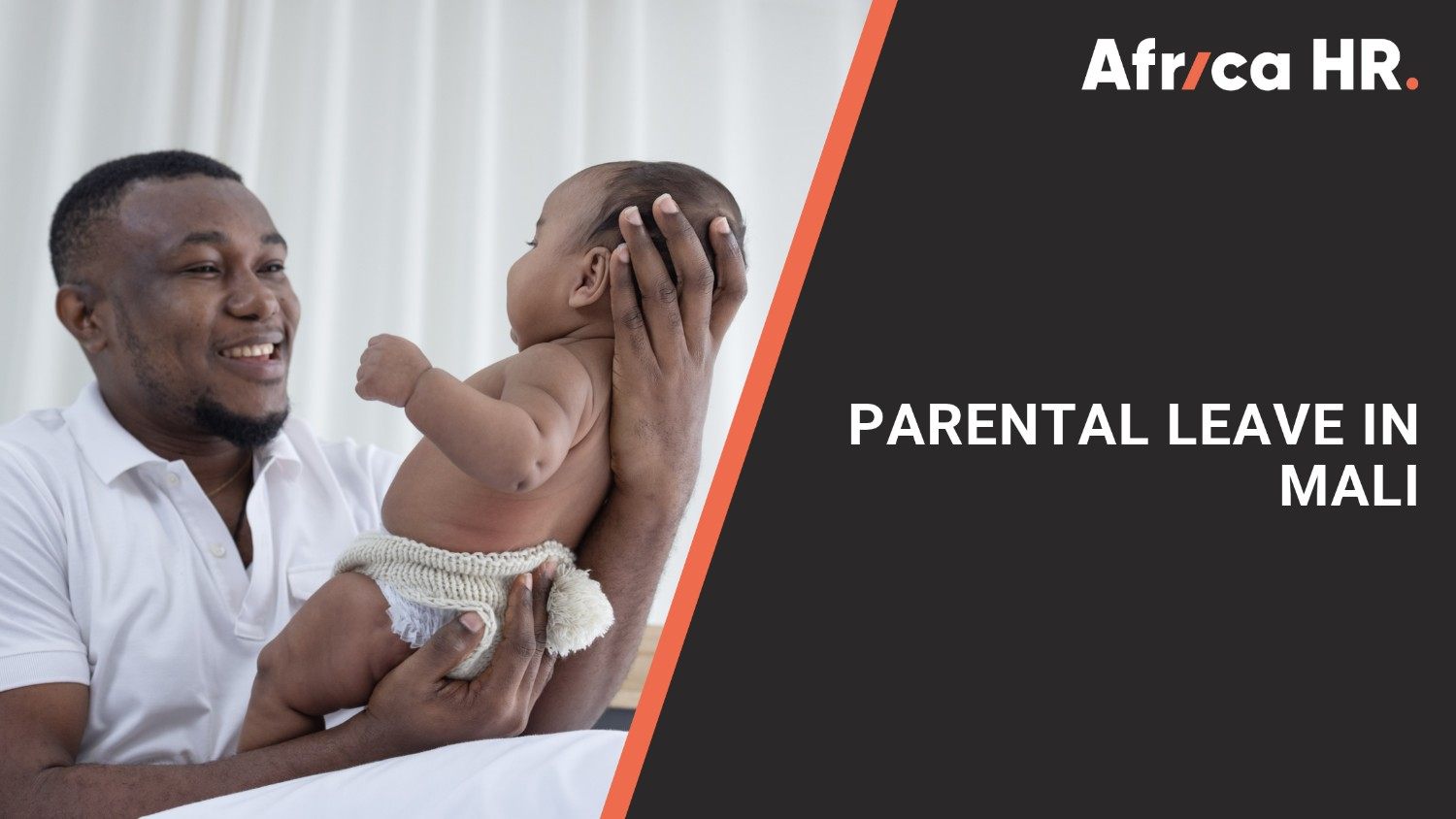
Maternity, Paternity, and Parental Leave in Mali: A 2026 Guide
Maternity and paternity leave can be quite complex for employers and employees to navigate.
To help you better understand how maternity and paternity leave play out in Mali, our experts have compiled this simple guide.
The law about maternity leave in Mali
Duration of maternity leave in Mali
In Mali, the female contract employee with at least 9 months of creditable service with the employer will be entitled to 14 weeks of maternity leave once she makes a properly documented formal request.
The leave starts 6 weeks before the expected delivery date and ends 8 weeks after the birth. If the baby arrives earlier than expected, the leave is not shortened. It is extended so that the employee still receives the full 14 weeks.
The law also sets a minimum period of compulsory rest. She cannot be required to work for 7 consecutive weeks, and 3 of those weeks must fall before the expected delivery date.
Part-time workers shall benefit from legal and agreement-based provisions relating to maternity protection, the termination of the employment relationship, annual leave, public holidays and sick leave. However, financial benefits shall be proportionate to the duration of employment and remuneration.
Pay and benefits during maternity leave in Mali
While an employee is on maternity leave, she is entitled to free medical care.
She also receives the pay she was earning at the moment her work was suspended, under the conditions set out in the social security code.
In addition, she keeps her entitlement to benefits in kind throughout the leave.
Illness linked to pregnancy or childbirth in Mali
If an employee falls ill because of the pregnancy or the birth, and a medical certificate confirms it, she can claim an additional 3 weeks of leave on top of her standard maternity leave.
Some employees may still be unable to return to work once their leave has ended because of illness. In that case, their employment contract is suspended from the first day after the leave expires.
Once the three-week extension has run out, her employer must compensate her under the conditions set out in Article L.37 of the Labour Code.
Navigate employee leave and benefits in the Mali with Africa HR Solutions
Africa HR Solutions is your on-the-ground, 100% compliant EOR provider across 46+ African countries.
Our expertise in local labour law helps lift the burden of compliance from our clients’ shoulders. This keeps them up to code and their employees happy for greater productivity.
To find out more about how Africa HR Solutions can help you, speak with one of our payroll experts today.
Job protection in Mali
The law protects her job during this period. Her employer cannot terminate her contract at any point while it is suspended because of illness.
Nursing breaks in Mali
For 15 months after the birth, a mother is entitled to taking nursing breaks at her place of work. Together, these breaks cannot exceed one hour per working day. Taking them cannot lead to a reduction in her pay.
Ending pregnant employees’ contracts in Mali
A pregnant employee whose pregnancy has been medically confirmed may choose to end her employment contract.
She must give her employer 24 hours’ notice, unless a case of force majeure applies. She does not have to pay compensation in lieu of notice, which is the payment an employee would normally owe when leaving without working out the full notice period.
The same right applies throughout the 15-month nursing period after the birth, on the same terms.
Prohibited work for women in Mali
Pregnant women cannot be employed in work that is beyond their strength or that presents a danger. They also cannot be employed in work that, by its nature or the conditions in which it is done, is likely to harm their morality.
Rest periods for women in Mali
Women must have a rest period of at least twelve consecutive hours. This rule applies to women generally, so it covers pregnant employees too.
Night work is also prohibited for women in industry. Again, this applies to women in general rather than pregnant women specifically.
Medical examinations in Mali
A labour inspector can require a doctor to examine a woman to check whether her work is beyond her strength. She is entitled to request this examination herself, and the inspector must then arrange it.
If the examination shows that the work is too much for her, she cannot be kept in that role. She must be moved to a suitable job. If no suitable job is available, the contract is terminated on the employer’s side.
Further rules to come in Mali
The detailed working conditions for women and pregnant women, including the specific types of work that are prohibited to them, will be set by decree.
Paternity leave in Mali
Insured male employees are entitled to 3 days of fully paid paternity leave upon the birth of a child.
This leave may be taken consecutively or separately, subject to agreement between the employer and the employee, but must be taken within 15 days of the birth. The benefit is not payable in the event of a stillbirth. Paternity benefits are paid by the government.
In addition, labour regulations provide for 10 days of special leave per year.
This leave is granted (in addition to annual leave), for events directly affecting the family, such as births, deaths, and marriages.
Immediate family members include the spouse, children, the employee's or spouse's parents, and the employee's or spouse's siblings.

About the Author
Grant Geraghty is a trusted HR and payroll compliance specialist with extensive experience across Africa. With a background in economics and payroll administration, he helps organisations navigate local regulations and streamline their expansion strategies on the continent.
Frequently Asked Questions
Who qualifies for maternity leave in Mali, and how long does it last?
A female contract employee with at least 9 months of creditable service with her employer is entitled to 14 weeks of maternity leave once she makes a properly documented formal request. The leave starts 6 weeks before the expected delivery date and ends 8 weeks after the birth. If the baby arrives early, the leave is extended so she still receives the full 14 weeks.
Is maternity leave paid in Mali?
Yes.
During maternity leave, an employee receives free medical care and the pay she was earning when her work was suspended, under the conditions set out in the social security code. She also keeps her entitlement to benefits in kind throughout the leave.
Can an employee take extra leave if she is ill because of her pregnancy or the birth?
Yes. If a medical certificate confirms that the illness is linked to the pregnancy or the birth, she can claim an additional 3 weeks of leave. If she is still unable to return once her leave ends, her contract is suspended, and her employer must compensate her under Article L.37 of the Labour Code once the three-week extension has run out.
The employer cannot terminate her contract while it is suspended because of illness.
Is a mother entitled to nursing breaks in Mali?
Yes. For 15 months after the birth, a mother is entitled to nursing breaks at her place of work. Together, these breaks cannot exceed one hour per working day, and they cannot lead to a reduction in her pay.
Is paternity leave a legal requirement in Mali?
Yes. Insured male employees are entitled to 3 days of fully paid paternity leave upon the birth of a child. The leave may be taken consecutively or separately, by agreement between the employer and the employee, but it must be taken within 15 days of the birth. It is not payable in the event of a stillbirth, and the benefit is paid by the government.
Table of Contents
You may also be interested in: