


The Dangote effect: how Africa’s largest refinery is reshaping business across the continent
Few enterprises become so emblematic of both their industry and their continent.
But the Dangote refinery has evolved into just that for the petroleum industry, for Nigeria, for the West African region, and for Africa as a whole.
What is the Dangote refinery?
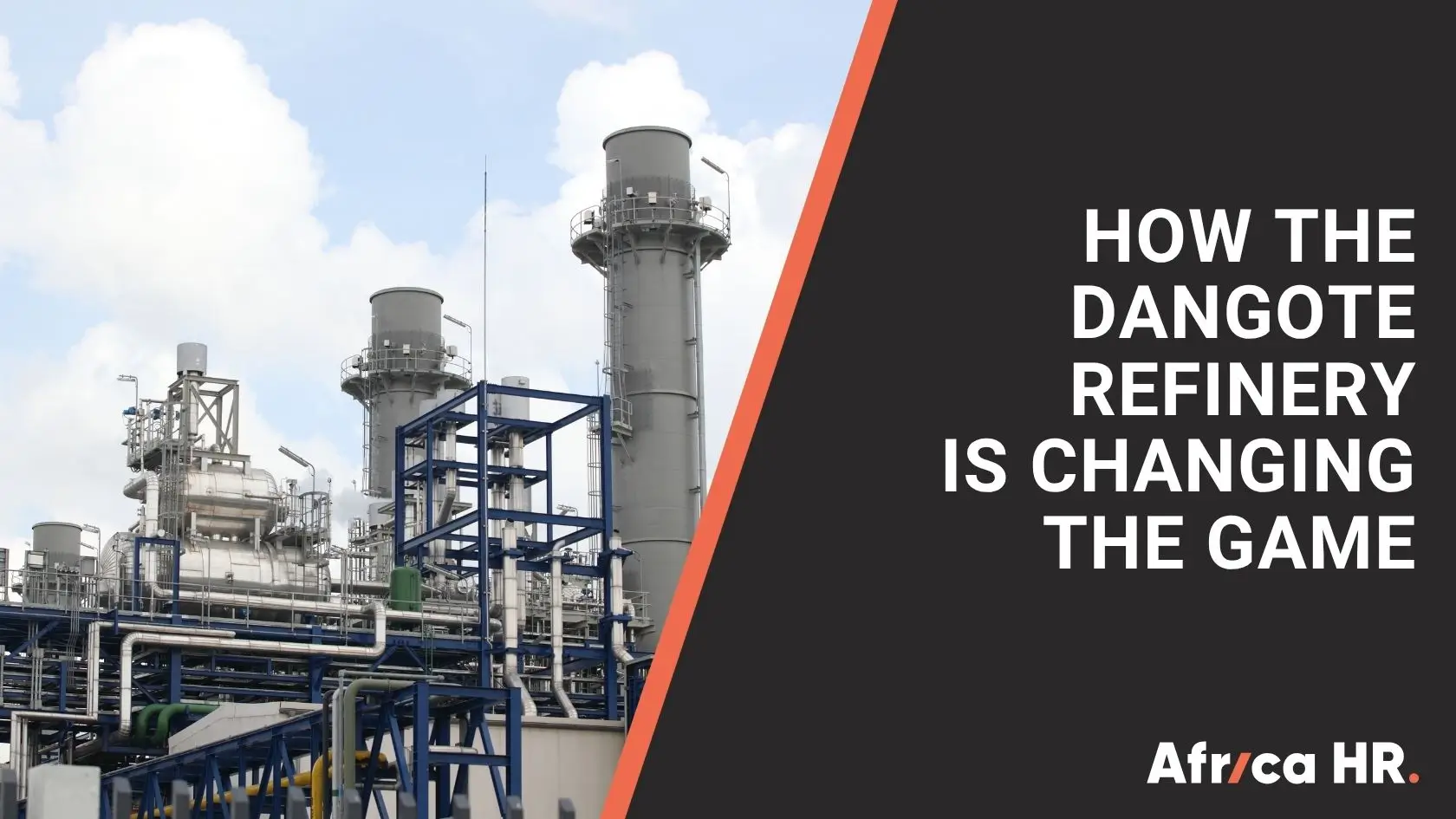
Owned by the billionaire Dangote family headed by Aliko Dangote and his daughters, the refinery is located on a site spanning 2,500 hectares at the Lekki Free Zone in Lagos, Nigeria. It is the world’s largest single-train oil refinery. This means that its facility uses one large, integrated distillation and processing line to handle the entire primary refining process, rather than multiple smaller parallel units.
The site has a capacity to process about 650,000 barrels per day of crude oil, contributing massively to Nigeria’s 1.56 million barrels of crude oil per day in June 2026.
Ranked 14th on the global oil production leaderboard, Nigeria has recently been under the limelight as an oil provider, in the context of fuel shortage due to the US-Iran war.
Now, the Dangote group is preparing for its next step: a $5 billion capital raise in October 2026 to expand capacity, further its refinement abilities, and establish a similar facility in Kenya.
Our Nigeria experts walk you through these expected changes, what they mean for the region and for the industry, as well as how you can expect the business and talent landscape to change as a result.
Africa: from refined petroleum importer to exporter
Africa has historically exported crude oil and imported refined petroleum products at a premium, an imbalance that has come at a cost. Dangote's stated aim is to reduce this dependency by refining locally and supplying African markets directly, starting with products like jet fuel. It has already done this, becoming Europe’s #1 jet fuel supplier this year.
This shift is not simply a matter of energy independence: it changes the very economics of doing business on the continent.
When a country imports refined fuel, the cost is absorbed throughout its economy:
- Transport
- Manufacturing
- In the price of almost everything that needs to move
A domestic refining capacity of the scale Dangote offers has the potential to lower these costs over time. In turn, this makes Nigeria, and other African markets that replicate the model, a more attractive place to base operations.
It also suggests a longer term move by African governments and private enterprise towards building local industrial capacity rather than depending on imports.
The workforce aspect
There is a workforce dimension too.
Refining, unlike crude extraction, is a value-added process that requires a broader mix of skills. It supports more permanent, skilled employment than extraction alone.
As Nigeria and potentially Kenya build this capacity, the demand will not be limited to oil and gas specialists. It will extend to the businesses that supply, maintain and service these facilities. Many of which will need to onboard talent quickly and compliantly across borders they may not have operated in before.
A business that wants to establish a presence to serve this emerging refining sector needs to be able to onboard local talent without the delay of setting up a legal entity first.
An EOR like Africa HR Solutions allows that business to:
- Test the market
- Onboard the right people
- Stay compliant with Nigerian or Kenyan labour law from the onset
Meanwhile the broader shift Dangote represents continues to unfold.
What Africa's refining boom means for employers across the continent
There is also a compliance dimension that is easy to underestimate.
Labour law in Nigeria differs meaningfully from labour law in Kenya, from minimum notice periods to termination procedures, all the way to social security contributions.
A business trying to manage this in-house across 2 or more countries, without dedicated local expertise, risks:
- Fines
- Disputes
- Reputational damage
...all at exactly the moment it should be capitalising on new demand.
An EOR partner in Nigeria or Kenya with established operations across the relevant jurisdictions absorbs this risk and keeps the business focused on delivery rather than paperwork.
Choose a reputable EOR partner in Nigeria & Kenya
With 15 years of experience as an EOR supporting employers across 46+ African countries, Africa HR Solutions understands the practical realities of onboarding in markets like Nigeria and Kenya.
If you're exploring how an EOR could support your expansion plans, our team is happy to talk through the details.
Businesses that build a scalable onboarding approach now, rather than reacting market by market, will be better placed to move quickly as the next opportunity appears.
Frequently Asked Questions
What is the Dangote refinery and why is it significant?
The Dangote refinery is the world's largest single train oil refinery, located in the Lekki Free Zone in Lagos, Nigeria. It has the capacity to process about 650,000 barrels of crude oil per day. Its significance lies in its potential to reduce Africa's historical dependence on imported refined petroleum products.
How does the refinery affect Africa's position in the global oil industry?
By refining crude oil locally rather than exporting it and importing refined products at a premium, the facility shifts Nigeria, and potentially the wider region, from being primarily a crude oil exporter. Instead, it gears it towards becoming a refined petroleum exporter, changing established trade patterns in the process.
What does the planned $5 billion capital raise mean for the refinery's future?
The capital raise, planned for October 2026, is intended to fund an expansion of processing capacity, further refinement capabilities, and the development of a similar facility in Kenya, suggesting the Dangote model may be replicated elsewhere on the continent.
Why does a refining boom in Nigeria and Kenya matter to employers outside the oil and gas sector?
Large scale industrial projects like this tend to generate demand across adjacent sectors. This includes logistics, transport, construction and engineering. This need for a broad skillset often requires companies to onboard skilled and semi-skilled workers quickly across multiple African jurisdictions.
What challenges do businesses face when onboarding talent across different African countries for projects like this?
Each African country has its own labour law, tax requirements and statutory compliance obligations. Setting up a local legal entity in each jurisdiction to onboard staff can be slow and costly, particularly for project-based or time-sensitive work.
How can an Employer of Record help businesses respond to this opportunity?
An Employer of Record allows a business to onboard staff compliantly in a new country without establishing a local entity first.
It manages local contracts, payroll and statutory deductions in line with local law. This supports faster onboarding and reduces compliance risk as demand grows across the continent.