


Top Countries Investing into Africa in 2026
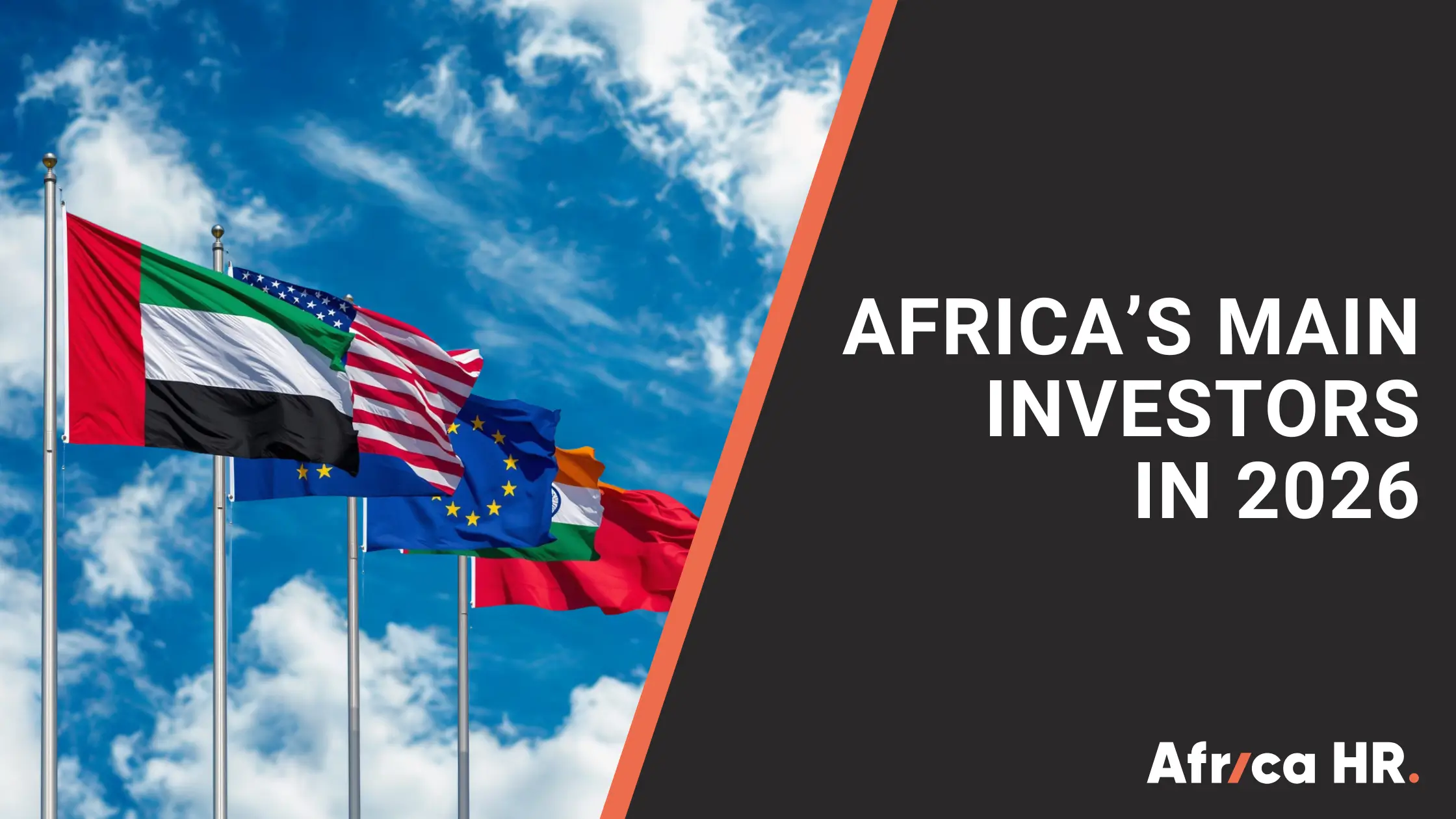
If you are a business looking for an international partnership in Africa, then understanding which nations are investing the most capital into the continent is essential. This will narrow the field of research and help you gain a better understanding of business interests in the region.
But surprises may lie ahead, as the UNCTAD and EY's Africa Attractiveness Report indicate that the picture is more nuanced than popular narratives suggest...
The UAE
The UAE has become one of the most significant capital investors in Africa, deploying $44 billion by 2023. These investments had a strong focus on energy transition projects according to EY’s Africa Attractiveness Report 2024.
Its flagship commitments include a $35 billion urban development deal in Egypt and a $34 billion green hydrogen project in Mauritania. Emirati investment tends to be infrastructure-heavy, concentrating on North Africa and energy-producing markets.
The UAE is also currently driving large-scale solar, wind, and green hydrogen projects across Egypt 🇪🇬, Morocco, Mauritania , Zambia, Mozambique, and Kenya.
The United States
The US leads Africa in project count as opposed to total capital alone.
Since 2021, the US has sponsored more than 800 trade and investment projects worth $18 billion across 47 African countries, while also dominating venture capital flows into African tech.
The Prosper Africa initiative has been the main project carrying this activity. American investors remain disproportionately active in fintech, healthcare technology and digital infrastructure. The US also leads in greenfield project origination, with 89 projects across the continent as of the latest EY reporting.
The US has targeted key African markets for these industries, including:
- Nigeria
- Kenya
- South Africa
- Egypt
- Rwanda
- Ghana
- Côte d'Ivoire
- The Democratic Republic of Congo
European countries
European investors hold the largest stock of FDI in Africa overall according to the UNCTAD. Europe as a region has achieved this market dominance through decades of commercial and post-colonial ties.
France, the Netherlands and the UK are among the top 5 individual sources of FDI stock. FDI from Tunisia increased 21% to $936 million and Morocco grew 55% to $1.6 billion in 2024, partly reflecting European capital flowing through North Africa. European investment tends to favour financial services, consumer goods and, increasingly, renewables.
China
China is frequently cited as Africa's main investor, but the data shows a slightly different narrative. According to UNCTAD and ODI, China ranks fifth by FDI stock, behind several European nations and the US.
That being said, its infrastructure investment across sub-Saharan Africa cumulatively exceeds $155 billion over two decades and generated over 102,000 jobs between 2019 and 2023. Chinese investments have been heavily concentrated in the mining/extraction industry, ports, roads and railways. Chinese investments are often made through state-backed entities rather than private investors. This means it shows up differently in FDI data than Western capital does.
India
India is an emerging but growing player when it comes to investments in Africa.
Its strengths lie in pharmaceuticals, IT services and light manufacturing, with a long commercial presence in East Africa. Indian firms have expanded significantly in Kenya, Tanzania and Ethiopia, and New Delhi has signalled Africa as a priority in its broader trade and investment strategy.
The bigger picture for African investment in 2026
Several structural trends are reshaping who invests in Africa and how.
- Venture debt reached a record $1.64 billion in 2025, up 63% year-on-year, with 107 debt transactions, the highest ever recorded.
- North Africa led in total FDI inflows in 2024, boosted by Egypt's large deals, while East Africa led in venture deal value in 2025.
- The most active African investors in 2025 were concentrated in South Africa, Egypt, Nigeria and Kenya, which are 4 key African markets.
Africa's investment landscape in 2026 is no longer shaped by a handful of Western funds. A broader, more locally grounded capital base is taking hold, with homegrown institutions, pan-African funds and development finance players all actively backing African entrepreneurs.
Partner with a reputable African EOR
Africa's investment landscape is shifting fast. If you are looking to expand into African markets, our team can help you navigate the complexities of onboarding and compliance across 46+ African countries.
To find out how we can best help you, get in touch with one of our consultants.
Frequently Asked Questions
Which country invests the most in Africa?
There is no single answer. The UAE leads in capital volume, having deployed $44 billion by 2023. The US leads in project count, with 89 greenfield projects and over 800 trade and investment initiatives since 2021. European countries collectively hold the largest stock of FDI overall, while China, despite its reputation, ranks fifth by FDI stock according to UNCTAD and ODI.
Is China really Africa's biggest investor?
Not according to the data. China is one of the most visible investors on the continent, particularly in infrastructure, but UNCTAD and ODI place it fifth by FDI stock, behind several European nations and the US. Its influence is significant, with over $155 billion in cumulative infrastructure investment across sub-Saharan Africa, but that does not translate into overall dominance when measured against total FDI.
Which African markets attract the most foreign investment?
North Africa, led by Egypt's large-scale energy deals, attracted the highest total FDI inflows in 2024. East Africa led in venture deal value in 2025. At country level, South Africa, Egypt, Nigeria and Kenya consistently generate the most activity, and the US has specifically targeted these markets alongside Rwanda, Ghana, Côte d'Ivoire and the DRC for fintech, healthcare technology and digital infrastructure investment.