

Using an EOR in francophone West Africa – what to expect
The French touch in Africa holds real appeal.
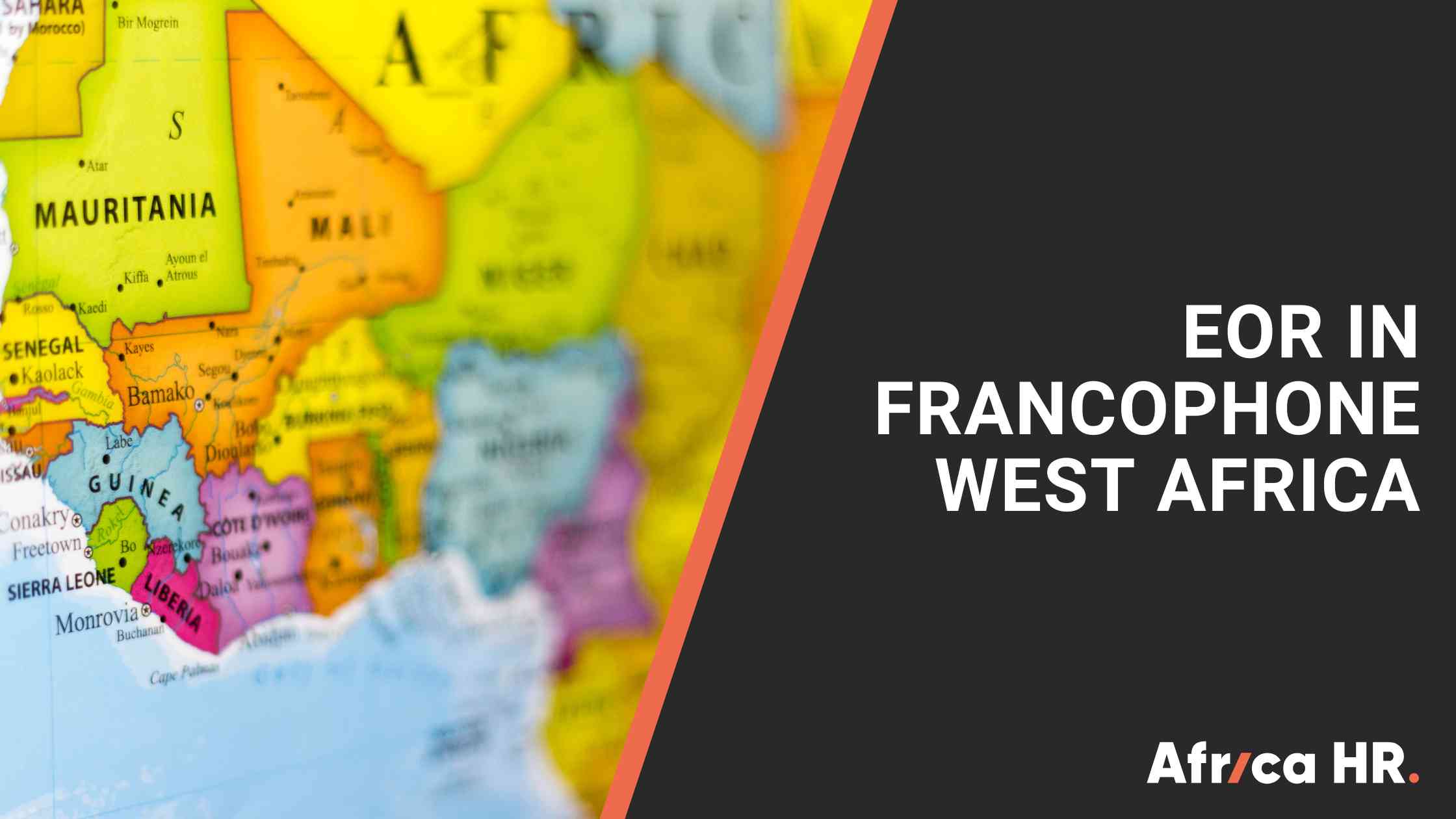
This is because Francophone West Africa includes some of the continent's most dynamic and lucrative economies: Côte d'Ivoire (Ivory Coast) 🇨🇮, Senegal 🇸🇳, Cameroon 🇨🇲, Mali 🇲🇱, Burkina Faso 🇧🇫, Guinea 🇬🇳, among others.
But setting up for success there without the right setup is complicated.
Labour laws are detailed and different from the Anglophone systems companies are used to, compliance obligations are real, the language barrier creates setbacks, and the administrative burdens can pile up.
An employer of record (EOR) in Africa, however, can take most of that off your plate. Here is what to expect when you use one.
A shared legal framework with important differences
Most francophone West African countries are members of OHADA, a regional body that harmonises business law across 17 member states. This is genuinely useful. It means that the legal environment for doing business follows a common structure, and an EOR that operates across the region will already understand that framework.
That said, OHADA has its limits and doesn’t mean that all regulations and procedures are the same across these 17 countries.
Employment law, for one, sits well outside its scope.
This means each country sets its own rules on:
- Contracts
- Termination
- Working hours
- Social contributions and deductions
- Leave entitlements
As such, Senegal's Labour Code is not the same as Côte d'Ivoire's. Cameroon has its own rules again, shaped partly by its French and British colonial history. Your EOR should know these differences in detail. The biggest mistake to make here would be to assume that regional expertise equals country-level expertise.
Contracts in French
Unsurprisingly, employment contracts in francophone West Africa are written in French. This is the legal requirement, and it is non-negotiable. If you are used to working in English, this is one of the first things your EOR should handle for you. They will draft contracts that comply with local labour law and are written in the correct language.
Many EORs will also provide an English translation for your reference. This is worth asking about upfront, especially if you have an internal HR or legal team that will want to review the contract.
Collective agreements matter
Across much of the region, collective agreements (known as “conventions collectives” in French) work alongside the national labour code. These agreements cover specific industries, and they often set minimum salaries, notice periods, and other entitlements that go beyond the baseline in law.
If your employees work in a sector covered by a collective agreement, those terms apply. A good EOR will identify the relevant agreement and ensure the employment contract reflects it.
Social contributions and payroll
Each country in francophone West Africa has its own social security system.
Contribution rates, the bodies you send payments to, and the benefits they cover all vary. In many countries, there are separate institutions for pensions, family benefits, and workplace injury insurance, and contributions are split between employer and employee at different rates.
UEMOA countries (which include Senegal, Côte d'Ivoire, Mali, Burkina Faso, Niger, Togo, Guinea-Bissau, and Benin) share a currency and a certain degree of economic integration, but their payroll systems are not harmonised.
Your EOR should run payroll in each country separately, in line with local rules, and handles registration with the relevant authorities on your behalf.
Termination rules are strict
Terminating an employee in francophone West Africa requires care.
Most countries in the region follow civil law traditions, which tend to favour employee protections. Notice periods are often set by law or collective agreements. Severance calculations can be complex, particularly for longer-serving employees. And in many jurisdictions, dismissals must follow a specific procedure, including formal written notice and, in some cases, approval from a labour inspectorate.
Your EOR should guide you through this process if and when the occasion arises. Trying to manage a termination remotely, without local knowledge, is one of the more common ways companies run non-compliance risks.
Language and communication
Day-to-day interactions with local authorities, social security offices, and labour inspectorates happen in French. Your EOR should act as the intermediary here. They should handle correspondence, submissions, and any queries from local bodies on your behalf.
For most international employers, this is one of the most practical reasons to use an EOR in the region: it removes a significant communication barrier.
Getting started
If you are looking at one particular country, the process is relatively straightforward. Your EOR assesses the role, identifies the applicable labour law and collective agreement, drafts the contract, registers the employee with the relevant social security bodies, and runs payroll from day one.
Multi-country onboarding across the region is more complex, but a specialist EOR with genuine on-the-ground presence will have the experience to lead you through the process.
Francophone West Africa offers real opportunity. With the right partner, the compliance side does not have to be the thing that slows you down. With over 15 years of experience in the region, Africa HR Solutions can help you write your success story in the region.
To find out more about how we can help you, get in touch with one of our consultants.
Frequently Asked Questions
Do I need a local entity to onboard employees in francophone West Africa?
No. An EOR allows you to onboard employees in the region without setting up a local company. The EOR employs staff on your behalf, handles contracts, payroll, and social contributions, and ensures compliance with local labour law from day one. It is the simplest route to market for companies that want to hire quickly without a permanent establishment.
What happens if employment law changes in one of the countries where I have staff?
A good EOR monitors regulatory changes across all the countries it operates in and updates employment contracts and payroll processes accordingly. In a region where labour codes and contribution rates do change, this ongoing compliance management is one of the most valuable things an EOR provides. You should ask any potential EOR partner how they track and communicate legislative updates.
Can an EOR help if I need to hire across multiple francophone West African countries at once?
Yes, though it is worth choosing a partner with genuine country-level expertise rather than broad regional coverage alone. Each country has its own labour code, social security system, and potentially its own applicable collective agreement. An EOR with on-the-ground presence across the region can manage that complexity, running separate payrolls and ensuring compliance in each jurisdiction simultaneously.